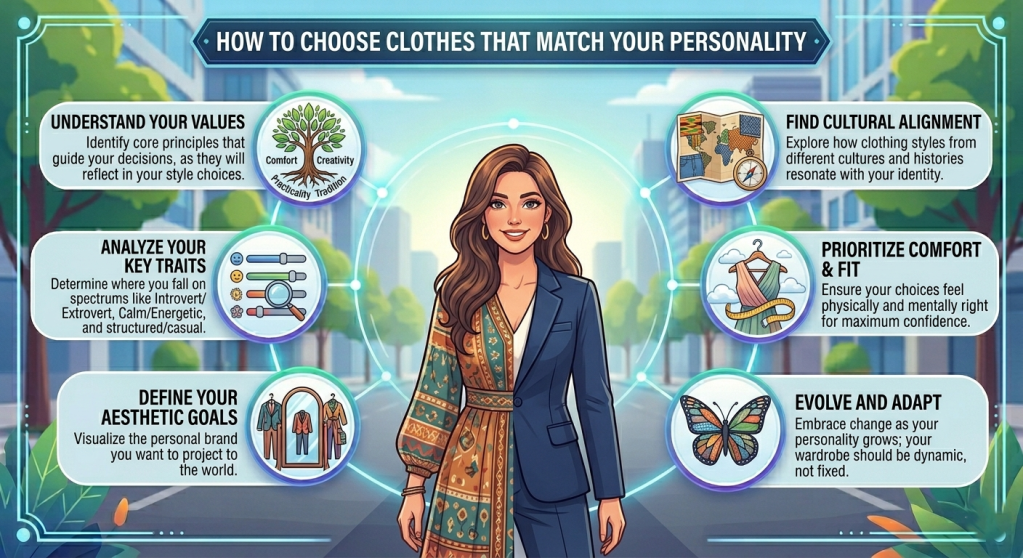
Ever put on an outfit that looked great on someone else but felt completely wrong on you? That’s not bad taste. That’s a mismatch between the clothes and who you actually are.
Dressing well isn’t just about following trends or copying what looks good in a magazine. It’s about figuring out what feels like “you” and building a wardrobe around that.
And you don’t need to spend a fortune to do it. Sometimes the perfect piece shows up as a genuine yard of deal at exactly the right time, long before you’ve even finished figuring out your style.
Let’s get into how to actually choose clothes that reflect your personality, not someone else’s.
Why Personality Should Guide Your Clothing Choices
Clothes are one of the few things you control completely about your appearance every single day. What you choose to wear says something about you before you even speak.
When your clothing matches your personality, you feel more comfortable, more confident, and more like yourself. When it doesn’t, even expensive or trendy pieces can feel off.
This is why personal style matters more than simply following whatever’s popular.
The Problem With Dressing for Trends Alone
Trends come and go fast. Chasing every new style means constantly buying clothes that may not actually suit you, your lifestyle, or your comfort level.
This often leads to closets full of items that get worn once or twice, then forgotten. Personality-driven dressing solves this by focusing on what genuinely fits who you are, not just what’s currently popular.
How to Identify Your Personal Style
Before choosing clothes that match your personality, you need a clear sense of what that personality actually looks like in clothing form. Here’s how to figure that out.
1. Look at What You Already Reach For
Check your closet. Notice which pieces you wear repeatedly and which ones sit untouched.
The clothes you reach for again and again usually reveal your real preferences, regardless of what you originally thought your style was.
This simple audit often reveals patterns in color, fit, or fabric that point toward your natural style.
2. Think About How You Want to Feel
Different clothes create different feelings. Some people feel confident in structured, tailored pieces. Others feel most like themselves in relaxed, casual clothing.
Ask yourself how you want to feel during your day, whether that’s powerful, comfortable, creative, or effortless. Let that feeling guide your clothing choices.
3. Consider Your Lifestyle First
Personality matters, but so does practicality. Someone who works in a physically active job needs different clothing than someone who works at a desk all day.
Choosing clothes that match your personality should also fit realistically into your actual daily life, not just an idealized version of it.
Balancing Style With Practical Needs
It’s easy to get pulled toward aspirational dressing, choosing pieces inspired by a lifestyle you don’t actually live. The most successful personal style blends authentic personality with practical, everyday function.
Top Tips for Choosing Clothes That Match Your Personality
Once you understand your style preferences, here’s how to actually apply that to your shopping choices.
1. Identify Your Color Preferences
Pay attention to colors you naturally gravitate toward, both in clothing and in everyday life. Bold colors often suit outgoing personalities, while neutral tones often appeal to those with a more understated style.
There’s no right or wrong here. The goal is consistency between how you feel and what you wear.
2. Pick a Few Signature Pieces
Many people with strong personal style have a few signature items they’re known for, whether that’s a specific jacket style, a particular accessory, or a consistent color palette.
These signature pieces help define your look without requiring an enormous wardrobe.
3. Mix Comfort With Expression
Personality-driven dressing doesn’t mean sacrificing comfort. The best personal style strikes a balance between expressing who you are and feeling physically comfortable throughout the day.
If a piece looks great but feels miserable to wear, it’s rarely worth keeping in regular rotation.
4. Don’t Be Afraid of Subtle Personality Touches
Not everyone wants bold, attention-grabbing fashion. Subtle touches, like a specific pattern, a unique accessory, or a consistent silhouette, can reflect personality just as effectively as loud statements.
Quiet personal style is just as valid as expressive personal style.
5. Shop With Intention, Not Impulse
When shopping, ask whether a piece actually fits your established style, or whether it’s simply appealing in the moment.
This doesn’t mean you can’t take advantage of a good yard of deal when you spot one. It means checking that the discounted item still fits who you are, rather than buying purely because the price is low.
6. Build Around Versatile Basics
Personality often shows best through how you style versatile pieces, not necessarily through buying entirely unique items for every outfit.
A simple white shirt can be styled dramatically differently depending on accessories, layering, and pairing choices, all reflecting personal style through small details.
7. Pay Attention to Fabric and Texture Preferences
Some people are drawn to structured, crisp fabrics. Others prefer soft, flowing materials. These preferences often connect directly to personality traits like organization, spontaneity, or relaxation.
Noticing these patterns helps refine future clothing choices even further.
8. Experiment Without Full Commitment
Trying new styles doesn’t require a complete wardrobe overhaul. Start small with accessories, layering pieces, or a single statement item before fully committing to a new direction.
This lets you test what genuinely resonates with your personality without wasting money on a drastic, regrettable wardrobe change.
9. Use Sales Strategically
Sales and discounts are a great opportunity to experiment with personal style without financial risk. Spotting a real yard of deal on a piece slightly outside your comfort zone gives you room to try something new at low risk.
If it doesn’t work out, you haven’t spent much. If it does, you’ve potentially found a new signature element of your style.
10. Let Your Style Evolve Naturally
Personality isn’t static, and neither is personal style. What feels authentic at twenty may shift by thirty or forty. Allow your wardrobe choices to evolve naturally instead of forcing consistency for its own sake.
The goal is always alignment between how you feel and what you wear, regardless of how that shifts over time.
Common Mistakes When Matching Clothes to Personality
A few common pitfalls can derail this process, even with good intentions.
- Copying someone else’s style exactly. What works for one person rarely translates perfectly to another body type or personality.
- Ignoring comfort for the sake of aesthetics. Clothes that look right but feel wrong rarely get worn consistently.
- Buying solely based on trends. This often leads to a wardrobe that doesn’t reflect genuine personal taste.
- Overlooking practical needs. A wardrobe disconnected from daily life becomes impractical quickly, regardless of style.
- Hesitating on good opportunities. Passing on a legitimate yard of deal on a piece that genuinely fits your style often leads to regret later.
How to Course-Correct
If your wardrobe currently feels disconnected from your personality, start small. Replace one or two pieces at a time with items that genuinely reflect how you want to look and feel, rather than overhauling everything at once.
Conclusion
Choosing clothes that match your personality isn’t about following strict rules or copying someone else’s wardrobe. It’s about paying attention to what genuinely feels like you, then building a wardrobe around that understanding.
This process takes time, a little experimentation, and occasional patience while waiting for the right piece, sometimes at a real yard of deal, to come along.
The result is a wardrobe that feels authentic, comfortable, and distinctly yours. Not because it follows every trend, but because it actually reflects who you are.
Start small, pay attention to what you naturally gravitate toward, and let your personal style develop naturally over time.
FAQs
1. How do I know what my personal style actually is? Look at the clothes you already wear most often and notice patterns in color, fit, and fabric. These patterns usually reveal your authentic style preferences.
2. Can personal style change over time? Yes, definitely. Personal style often evolves alongside personality, lifestyle, and confidence, so it’s normal for preferences to shift over the years.
3. Is it okay to follow trends if they don’t fully match my personality? Occasionally experimenting with trends is fine, but building your core wardrobe around your authentic personality leads to more consistent satisfaction with your clothing choices.
4. How can sales help me discover my personal style? A genuine yard of deal allows you to experiment with new styles at a lower financial risk, making it easier to test pieces slightly outside your usual comfort zone.
5. Does matching clothes to personality require an expensive wardrobe? Not at all. Personal style is about intentional choices, not price. A thoughtfully chosen, affordable wardrobe can reflect personality just as effectively as an expensive one.


